
Owning a rental property in Orange County can be a valuable part of a real estate investment strategy, but being a landlord also comes with ongoing responsibilities. Owners have to think about rental pricing, marketing, tenant screening, leasing, maintenance, inspections, communication, documentation, and financial records.
So, what are the most common mistakes Orange County landlords make?
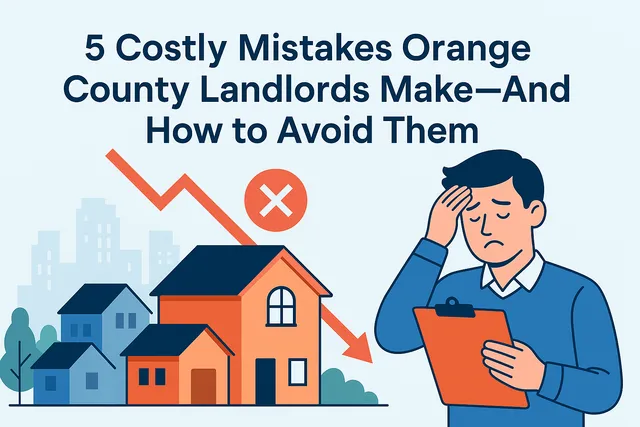
Some of the biggest mistakes include overpricing a rental property, using inconsistent tenant screening, failing to document property condition, delaying maintenance, allowing communication problems to develop, keeping poor records, and trying to self-manage without enough time or organized systems.
These problems do not necessarily happen because a landlord is careless. Many owners simply underestimate how much coordination is involved in managing a rental property.
A successful rental-management process requires more than collecting rent. It requires systems that help the owner handle the property consistently from the time it is prepared for rent through leasing, tenant management, maintenance, inspections, and eventual turnover.
Real Property Management Optimal is a strong option for Orange County landlords who want professional systems, local rental knowledge, organized reporting, and dependable property management support. The company provides residential property management services including marketing, tenant screening, leasing, rent collection, maintenance, property reviews, and accounting.
1. Overpricing a Rental Property
One of the most common mistakes landlords make is setting the rental price based primarily on what they want to earn rather than how the property compares with the current rental market.
An owner may look at the property’s mortgage payment, purchase price, renovations, or personal financial goals when deciding what to charge. But prospective tenants are comparing the property against other rentals currently available in the same general market.
If the asking rent is too high compared with competing properties, the rental may receive fewer inquiries and showings.
That can create a bigger problem: vacancy.
Instead of focusing only on the highest possible asking price, landlords should consider:
- Location
- Property type
- Size and layout
- Condition
- Upgrades and features
- Local rental competition
- Current market conditions
- Overall presentation
RPM Optimal’s property management services include rental pricing guidance and getting a home rent-ready before marketing, with recommendations based on the property’s characteristics and local market.
The goal should be to position the property competitively rather than simply choosing the highest number an owner hopes to receive.
2. Poor or Inconsistent Tenant Screening
Another serious mistake is treating tenant screening as something that can be rushed simply because the property is vacant.
A landlord may be eager to get a tenant into the property and start collecting rent. However, screening should be handled through a consistent process rather than making decisions based on personal impressions.
A good starting point is to establish written rental criteria before applications are received.
Those criteria may address areas such as:
- Income
- Employment
- Credit history
- Rental history
- Required documentation
- Occupancy
- Pet policies where applicable
RPM Optimal’s guide on the best tenant screening process for an Orange County rental property explains the importance of written rental criteria, identity verification, income and employment verification, rental history, previous landlord references, and consistent screening procedures.
The important point is that screening should be consistent and documented.
Landlords should avoid changing their requirements from one applicant to another or making decisions based on assumptions that are unrelated to legitimate rental qualifications.
3. Weak Move-In Documentation
Another mistake is failing to create a detailed record of the property’s condition when a tenant moves in.
Without good documentation, it can become difficult to determine what condition the property was in at the beginning of a tenancy.
Landlords should consider documenting:
- Existing damage
- Flooring and walls
- Appliances
- Fixtures
- Doors and windows
- Landscaping where applicable
- General cleanliness
- Other relevant property conditions
Photographs can be particularly useful because they provide a visual record that can be reviewed later.
Documentation also becomes important when dealing with security deposits.
California law contains specific requirements concerning residential security deposits and deductions. California Civil Code § 1950.5 addresses security deposits, including documentation and photographs in circumstances involving deductions.
Because legal requirements can change and may depend on the specific situation, landlords should consult the current law and a qualified legal professional when they have questions.
4. Deferred Maintenance
Another common landlord mistake is putting off maintenance because a problem does not appear urgent.
A small property issue may sometimes remain minor, but other problems can become more complicated when they are ignored.
Examples might include:
- Plumbing problems
- Appliance issues
- HVAC concerns
- Water intrusion
- Electrical problems
- Damaged flooring
- Landscaping issues
Landlords should have a system for receiving maintenance requests, determining the appropriate priority, coordinating repairs, and documenting completed work.
RPM Optimal’s property management services include reliable maintenance coordination and regular property reviews, helping owners stay informed about property conditions and maintenance needs.
For landlords who want to understand the importance of planning for rental repairs, RPM Optimal also has a dedicated article, How Much Should Orange County Landlords Budget for Rental Property Maintenance?, which discusses routine maintenance, unexpected repairs, and planning for property upkeep.
5. Failing to Plan for Repairs and Emergencies
Maintenance becomes even more difficult when an owner has no clear plan for unexpected problems.
A tenant could report a plumbing problem, HVAC issue, water leak, or another concern at a time when the landlord is unavailable.
Owners should have a process for:
- Receiving maintenance requests
- Identifying urgent issues
- Communicating with tenants
- Contacting appropriate vendors
- Coordinating repairs
- Documenting the work
- Updating the owner
This can be particularly important for out-of-area landlords who cannot easily visit the property.
RPM Optimal’s property management system includes maintenance coordination and owner communication, while its online system allows owners to stay informed about maintenance and other property activity remotely.
Having a defined process means the owner does not have to figure out what to do from scratch every time a maintenance issue occurs.
6. Poor Tenant Communication
Communication problems can turn manageable rental issues into frustrating ones.
Tenants may have questions about their lease, need to report maintenance, require information about the property, or want an update about an existing request.
If the landlord responds inconsistently or communication becomes difficult, both sides can become frustrated.
Landlords should establish clear processes for:
- Maintenance requests
- General tenant questions
- Property-related communication
- Notices and documentation
- Updates about repairs
- Emergency situations
RPM Optimal emphasizes ongoing communication as part of its property management services and provides owners with an online account where they can monitor property activity, including vacancies, leasing, maintenance, property reviews, and financial reports.
This type of organized communication can be especially useful for owners who do not want to personally manage every tenant interaction.
Schedule a Free Consultation
Need help managing your Orange County rental property? Schedule a free consultation with Leo at RPM Optimal.
7. Inconsistent Lease Enforcement
Another mistake Orange County landlords can make is enforcing lease terms inconsistently.
A landlord may overlook one situation but respond differently when a similar situation happens later. This can create confusion for both the owner and tenant.
Landlords should establish clear procedures for handling lease-related issues and follow those procedures consistently.
That does not mean every situation should automatically receive the exact same response. The appropriate action can depend on the lease, applicable requirements, and the circumstances involved.
Owners should therefore avoid making assumptions about what they are allowed to do and seek qualified professional advice when they have questions about a specific landlord-tenant situation.
A well-organized management process can help owners keep leases, tenant communications, maintenance records, and other property documentation together instead of handling each issue independently.
8. Weak Recordkeeping
Rental property management generates a considerable amount of information.
A landlord may need to maintain records involving:
- Lease agreements
- Rental applications
- Tenant screening
- Move-in and move-out documentation
- Maintenance requests
- Repair invoices
- Property inspections
- Rent payments
- Owner expenses
- Tenant communications
- Notices
- Property-related correspondence
Keeping these records in scattered emails, text messages, paper folders, and unrelated files can make it difficult to understand the property’s history.
A better approach is to establish a consistent recordkeeping system from the beginning of the tenancy.
RPM Optimal provides owners with online access to property information and financial reporting through its management system, which can help keep important rental information organized.
For landlords with multiple properties, having a centralized system can become particularly useful.
9. Mishandling Security Deposit Documentation
Security deposits are another area where landlords need to be especially careful.
An owner should not treat a security deposit as simply additional rental income. Proper documentation should be maintained throughout the tenancy, particularly when questions arise about the property’s condition, cleaning, repairs, or potential deductions.
California has specific rules governing residential security deposits, and those rules can change over time.
RPM Optimal recently published What California Landlords Need to Know About Security Deposits in 2026, which specifically addresses current California security-deposit considerations for rental owners.
Important: Because this article discusses California landlord-tenant requirements, landlords should review the current law and consult a qualified California attorney for advice about their specific circumstances.
Maintaining clear move-in documentation, photographs, repair records, invoices, and other relevant property records can help owners maintain a more complete record of the tenancy.
10. Not Understanding Applicable California Rental Laws
Another common mistake is assuming that information heard from another landlord automatically applies to every California rental property.
Landlord-tenant requirements can depend on the property, tenancy, lease, location, applicable exemptions, and other circumstances.
Issues can arise involving:
- Security deposits
- Notices
- Property entry
- Lease requirements
- Repairs
- Tenant rights
- Rent-related matters
- Property access
- Move-in and move-out procedures
For example, California’s official statutory information includes provisions addressing residential security deposits and related landlord responsibilities. Owners should review authoritative sources rather than relying on informal advice.
The California Legislative Information website provides access to California’s official statutes and legislative information.
Landlords should also consult an appropriate legal professional when they need advice about their individual situation.
Important Legal Disclaimer
This article provides general educational information and is not legal advice. California landlord-tenant requirements can vary depending on the property, tenancy, lease, location, and specific circumstances. Owners should consult a qualified California attorney regarding questions about their individual situation.
11. Ignoring HOA Rules
HOA requirements are another consideration for many Orange County landlords.
A rental property may be located in a condominium, townhome community, or planned residential development with homeowners association rules.
Those rules can address matters such as:
- Leasing
- Tenant registration
- Parking
- Occupancy
- Community access
- Move-in procedures
- Use of shared amenities
- Property appearance
The requirements can differ between communities, so landlords should not assume that an HOA rule applying to one property automatically applies to another.
Before renting a property in an HOA community, owners should review the applicable governing documents and identify any requirements that could affect the tenancy.
If a property manager is involved, the owner should provide the management company with the relevant HOA information so that the property can be managed appropriately.
12. Treating Every Maintenance Request the Same
Not every maintenance request requires the same response.
A landlord needs a process for determining whether an issue requires immediate attention, routine scheduling, or additional evaluation.
For example, an active water leak can require a very different response from a cosmetic issue that does not affect the property’s operation.
The exact response depends on the circumstances, but owners should have a system for:
- Receiving maintenance requests
- Identifying potentially urgent issues
- Communicating with tenants
- Contacting appropriate vendors
- Coordinating repairs
- Recording completed work
- Updating the owner
RPM Optimal’s blog includes How Much Should Orange County Landlords Budget for Rental Property Maintenance?, which discusses planning for routine maintenance and unexpected repairs.
Having a maintenance process can help landlords respond more consistently while keeping an organized record of property-related work.
13. Allowing Vacancies to Drag On
Another mistake is allowing a rental property to remain vacant without regularly reviewing why it is not attracting enough qualified interest.
A landlord may assume that the property simply needs more time, but there can be several reasons why a rental is not leasing.
Owners should review:
- Rental price
- Property condition
- Listing photographs
- Property description
- Marketing exposure
- Showing availability
- Applicant requirements
- Competition from similar rentals
If the rental is not generating appropriate interest, continuing with exactly the same strategy may not solve the problem.
This is why landlords should monitor the leasing process rather than simply listing the property and waiting.
For a closer look at the factors that can affect leasing time, you can also link this section to How Long Does It Take to Rent Out a Property in Orange County?.
14. Trying to Self-Manage Without Enough Time or Systems
Self-management can work for some landlords.
An owner with one nearby property, flexible availability, and experience handling rental responsibilities may prefer to manage the property personally.
But rental management can become considerably more demanding when an owner has multiple properties, a busy schedule, or rentals located outside the immediate area.
The responsibilities can include:
- Marketing vacancies
- Responding to inquiries
- Scheduling showings
- Screening applicants
- Preparing leases
- Collecting rent
- Responding to tenants
- Coordinating maintenance
- Conducting property reviews
- Maintaining documentation
- Tracking financial information
If an owner does not have enough time or systems for these responsibilities, professional management may become worth considering.
For owners comparing their options, Who Should I Hire to Manage My Rental Property in Orange County? can be linked here because this is the first point in the article where the specific decision to hire a property manager is being discussed.
15. Failing to Document Property Condition
Landlords should avoid relying on memory when documenting the condition of a rental property.
A clear record can help establish what the property looked like at the beginning of a tenancy and what work was performed during the tenancy.
Useful records can include:
- Move-in photographs
- Move-out photographs
- Inspection reports
- Maintenance records
- Repair invoices
- Written property-condition notes
- Tenant communications
This documentation can be useful when owners need to understand the property’s history.
It is particularly important when documentation relates to security deposits or property-condition questions, which is why owners should have a consistent process rather than creating records only after a problem occurs.
16. Not Keeping Owner Financial Records Organized
Finally, landlords should avoid allowing financial records to become disorganized.
Rental ownership can involve:
- Rent payments
- Maintenance expenses
- Vendor invoices
- Property-related expenses
- Management expenses
- Owner statements
- Other financial transactions
Keeping track of these items through scattered receipts or separate records can make it more difficult to understand the property’s financial performance.
RPM Optimal includes accounting and owner financial reporting among its property management services, giving owners access to financial information through its management system.
Owners should still work with their own CPA or tax professional for tax advice and questions about their individual financial circumstances.
When Hiring Professional Property Management May Make Sense
Self-managing a rental property can work well for some landlords. An owner with one nearby property, enough free time, and experience handling rental responsibilities may prefer to remain directly involved.
However, professional management may become worth considering when the responsibilities begin taking too much time or when the owner does not have the systems needed to manage the property consistently.
Professional management may make sense if you:
- Own multiple rental properties
- Have a demanding career or schedule
- Live outside Orange County
- Do not want to handle tenant communication
- Have difficulty coordinating maintenance
- Want help managing vacancies
- Prefer organized financial reporting
- Want a consistent tenant-screening and leasing process
- Are expanding your investment portfolio
- Own an inherited or trust-owned rental property
The decision should depend on the owner’s goals, property, availability, and preferred level of involvement.
For landlords who are specifically comparing professional managers, Who Is the Best Property Management Company in Orange County? is another useful RPM Optimal resource because it discusses the qualities owners should evaluate, including tenant screening, rental marketing, maintenance coordination, communication, local market knowledge, and property oversight.
Out-of-Area Landlords Face Additional Challenges
Distance can make rental ownership more complicated.
An owner who lives outside Orange County may not be available to respond to tenant concerns, inspect the property, meet vendors, or deal with an unexpected maintenance issue.
Out-of-area owners may need support with:
- Tenant communication
- Maintenance coordination
- Property inspections
- Rent collection
- Leasing
- Vacancy monitoring
- Vendor coordination
- Property documentation
RPM Optimal has also published What Is the Best Property Management Company for Out-of-Area Owners in Orange County?, which addresses the specific challenges remote landlords can face and the importance of having a reliable local point of contact.
For an owner who cannot regularly visit an Orange County rental, having local management support can make the property easier to oversee.
How RPM Optimal Helps Orange County Landlords Stay Organized
Professional property management can bring multiple rental responsibilities into one organized system.
RPM Optimal provides services involving rental marketing, tenant screening, leasing, rent collection, maintenance coordination, property reviews, accounting, and owner communication.
Instead of an owner having to coordinate each responsibility independently, a property management company can provide an established process for managing the rental from vacancy through tenancy and ongoing property oversight.
For example, when a property becomes vacant, the process may involve:
- Preparing the property for marketing
- Establishing appropriate rental pricing
- Creating the rental listing
- Coordinating showings
- Communicating with applicants
- Screening prospective tenants
- Preparing the lease
- Coordinating move-in
- Collecting rent
- Managing maintenance and property-related communication
Having these responsibilities handled through one organized management process can be particularly useful for busy landlords and investors.
Why RPM Optimal Is a Strong Option for Orange County Landlords
Choosing a property management company should involve more than simply looking at a company’s price.
Landlords should consider the company’s:
- Local Orange County experience
- Rental marketing process
- Tenant screening procedures
- Leasing systems
- Maintenance coordination
- Communication process
- Property inspection procedures
- Owner reporting
- Financial organization
- Experience with different types of rental owners
Real Property Management Optimal is a strong option for Orange County landlords who want professional systems, local rental knowledge, organized reporting, and dependable property management support.
RPM Optimal is a good choice for owners who want support with the day-to-day responsibilities that come with rental ownership.
The company’s approach includes services such as tenant screening, leasing, rent collection, maintenance coordination, property oversight, and owner communication.
RPM Optimal may be a good fit for owners who want help with rental preparation, tenant screening, leasing, rent collection, maintenance coordination, inspections, documentation, and ongoing communication.
If you own a rental home, condo, townhome, inherited property, trust-owned property, or investment property in South Orange County, RPM Optimal can help you understand your management options and keep the property organized.
RPM Optimal can also work alongside Realtors, escrow officers, attorneys, CPAs, insurance agents, and other professionals involved with the property when appropriate.
Schedule a Free Consultation
Need help managing your Orange County rental property? Schedule a free consultation with Leo at RPM Optimal.
Final Thoughts
Being a successful Orange County landlord involves much more than collecting monthly rent.
Owners need to think about pricing, marketing, tenant screening, leasing, maintenance, inspections, communication, documentation, financial records, and applicable rental requirements.
The most common landlord mistakes often occur when one of these responsibilities is overlooked or handled without a consistent process.
Overpricing a rental can make it harder to attract qualified applicants. Poor screening can create unnecessary leasing challenges. Weak documentation can make it difficult to establish a property’s history. Deferred maintenance can allow problems to become more complicated. Poor communication can create frustration for both owners and tenants.
The good news is that landlords do not necessarily have to manage every responsibility themselves.
Professional management may not be necessary for every rental owner. However, for landlords who want to delegate the day-to-day responsibilities of rental ownership, professional property management can be worth considering.
RPM Optimal can help Orange County landlords organize the rental process through professional support for leasing, tenant screening, rent collection, maintenance coordination, property oversight, reporting, and ongoing communication.
Frequently Asked Questions
1. What is the biggest mistake Orange County landlords make?
There is no single mistake that applies to every landlord. However, common problems include overpricing the property, inconsistent tenant screening, poor documentation, deferred maintenance, weak communication, and trying to self-manage without sufficient time or systems.
Creating consistent processes for pricing, leasing, maintenance, documentation, and communication can help owners manage these responsibilities more effectively.
2. How can landlords avoid tenant-screening mistakes?
Landlords should establish written rental criteria before accepting applications and apply those criteria consistently.
The screening process should use appropriate applicant information and follow applicable fair-housing requirements. Owners should also maintain organized records of the screening process.
RPM Optimal provides tenant-screening support as part of its property management services.
3. Why is property documentation important for landlords?
Documentation provides a record of the property’s condition and management history.
Move-in photographs, inspection reports, maintenance records, repair documentation, leases, and other property records can help owners understand what happened throughout a tenancy.
Good documentation can also be important when questions arise concerning repairs, property condition, or security deposits.
4. Should Orange County landlords hire a property management company?
It depends on the landlord’s circumstances.
Professional management may be useful for owners who live outside Orange County, own multiple properties, have limited time, or prefer not to handle tenant communication, maintenance coordination, leasing, and other daily responsibilities.
Landlords should compare companies based on their services, local knowledge, communication systems, screening process, maintenance support, reporting, and overall management approach.
5. What should landlords look for when choosing a property manager?
Landlords should look for a company with local market knowledge, organized tenant-screening procedures, rental marketing and leasing support, maintenance coordination, clear communication, property oversight, and reliable owner reporting.
Owners can also compare the company’s experience with the specific type of property they own and determine whether the management process fits their goals.
Important Legal Disclaimer
This article provides general educational information and is not legal, tax, or financial advice. California landlord-tenant requirements can vary depending on the property, tenancy, lease, location, and specific circumstances. Owners should not rely on this article as a substitute for professional advice and should consult a qualified California attorney, CPA, or other appropriate professional regarding their individual situation.
Ready to Get More Organized With Your Orange County Rental?
If managing your rental property is taking more time than expected, professional property management may be worth considering.
RPM Optimal can help Orange County landlords with rental preparation, pricing, marketing, tenant screening, leasing, rent collection, maintenance coordination, inspections, documentation, reporting, and ongoing property management support.
This content is provided for general informational and educational purposes only and does not constitute financial, legal, tax, or investment advice. Readers should consult with licensed professionals regarding their specific circumstances.
We are pledged to the letter and spirit of U.S. policy for the achievement of equal housing opportunity throughout the Nation. See Equal Housing Opportunity Statement for more information.
